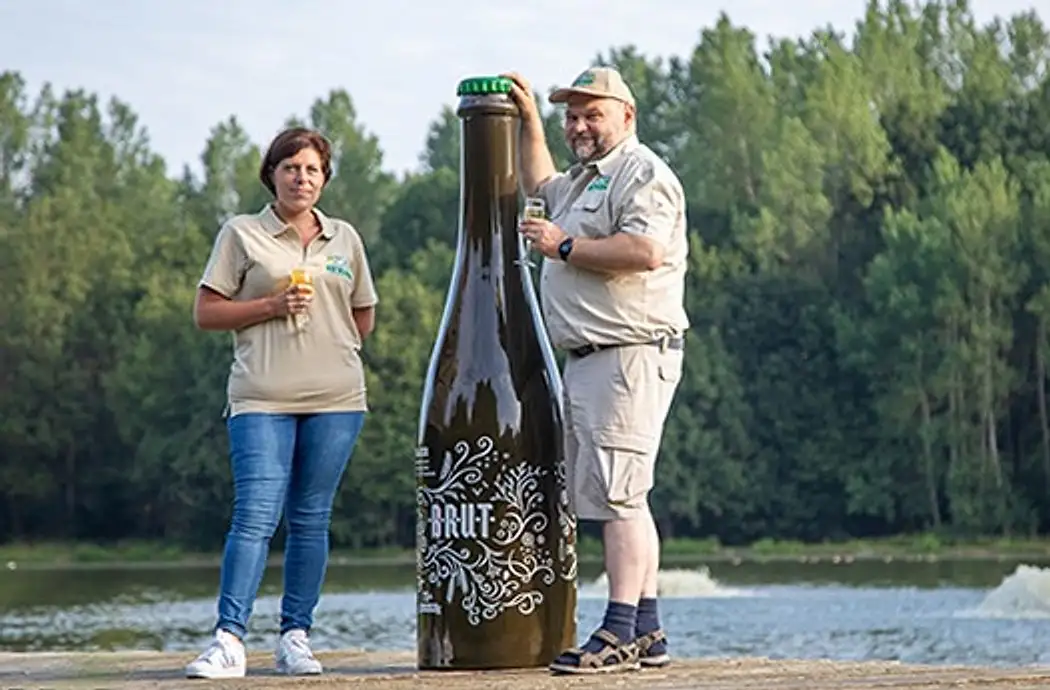
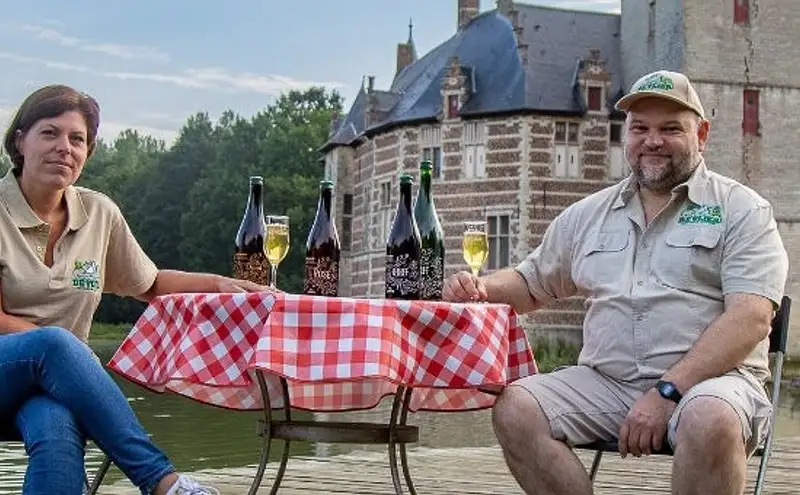
Marc Andries graduated from the Vrije Universiteit Brussel as an engineer in chemistry and agriculture, biotechnology option. With that background he built a highly varied career before starting his own brewery.
01 Achouffe
He started at Meura, the largest producer, in Belgium at least, of equipment for the brewing industry. In the mid-nineties Marc went to work for Achouffe, where he followed up production at Brasserie d’Achouffe.
At the same time he was also active at Brasserie Piron in Aubel, restarted in 1993, in which the Achouffe brewery had taken a majority stake in 1996. There he continued to experiment with the continuous fermentation system.
02 Haacht
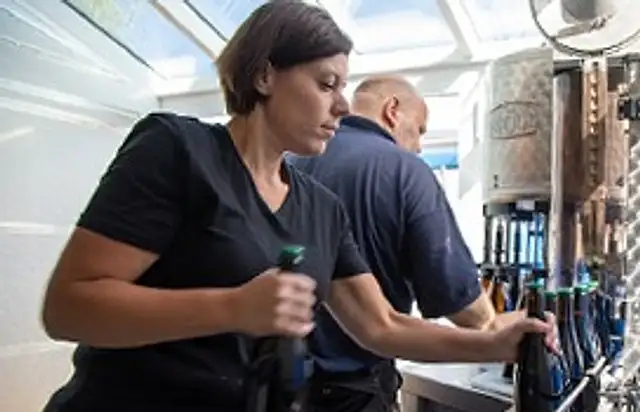
In 1999 he did not really fancy a move to faraway Achouffe. So Marc left Achouffe and went to work at Brouwerij Haacht in Boortmeerbeek, which at that moment was looking for someone to run the bottling plant and to help set up a project to install and start up a new bottling plant.
03 Solar cells
Through his experiences at Achouffe and Haacht, Marc had developed a taste for starting up production lines. When the project for the new bottling plant in Haacht was behind him, he left the brewery to start up a production line for manufacturing solar cells at a company in Tienen. He worked there for four years, and afterwards continued his work in the Netherlands at another company that also made solar cells.
04 A brewery of his own
In 2008 a long-smouldering project suddenly picked up real speed: starting a brewery of his own. On 10 March of that year the bvba Brouwerij De Vlier was christened.
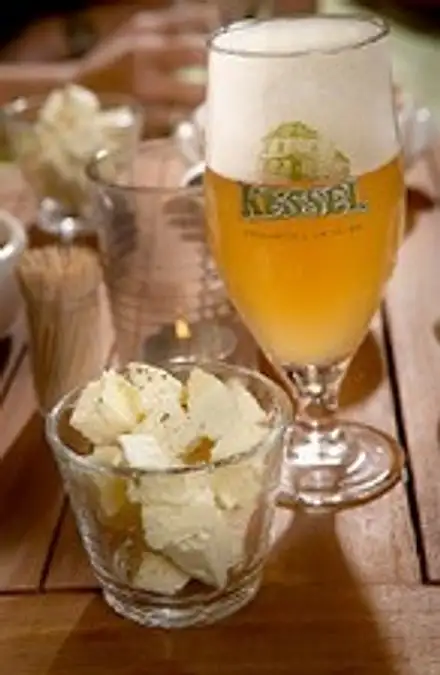
As a location, an empty building was found in the centre of Kessel-Lo, a district of Leuven, where the café Bieduif’ke used to be. The name of the new brewery came from the name of the area, Vlierbeek: it became Brouwerij De Vlier. The first beer was called Kessel-Blond.
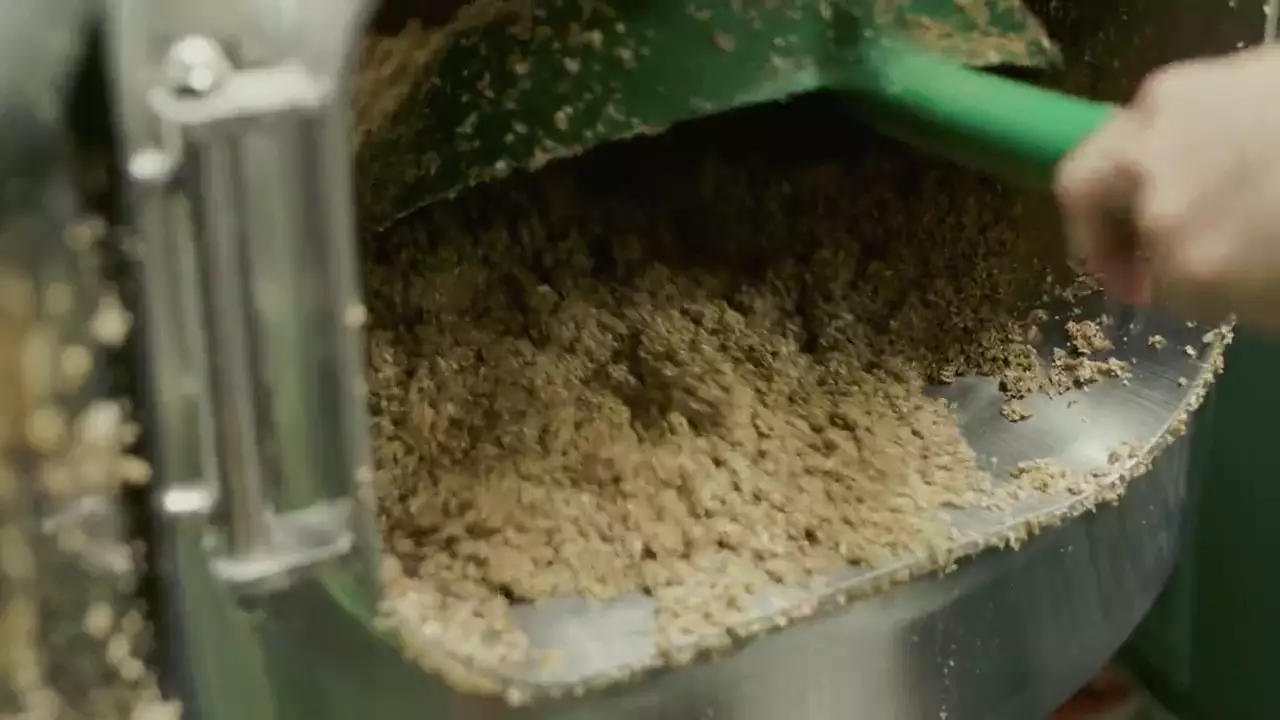
In April it was decided to buy a completely new brewing installation from Pierre Rajotte, a Canadian supplier of good-quality small brewery installations at affordable prices (and author of the book “Belgian Ales”). The brew kettles and tanks were delivered at the beginning of June and installed straight away, so that test brews could be made that same month. In July the first beer was brewed on a large scale, and since September 2008 the beer has been on sale in cafés, drinks shops and local produce shops.
05 Holsbeek
Marc soon came to the conclusion that the location in Kessel-Lo was the wrong choice in terms of logistics. First part of a warehouse in Winksele was rented, but in the end a better place was found in Holsbeek, close to Kessel-Lo, on the Leuvensebaan.
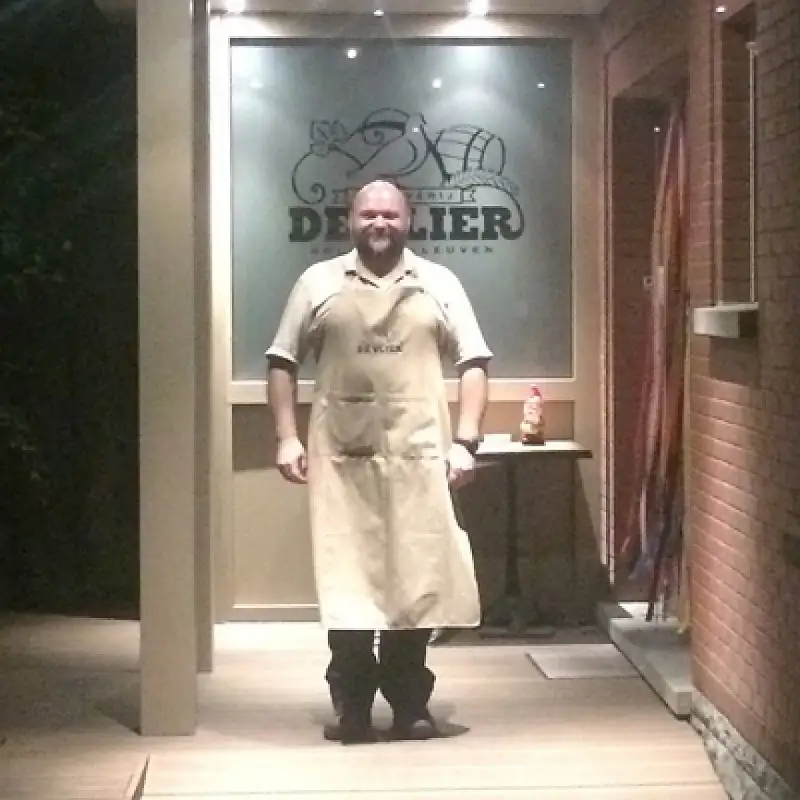
The detached house with a large cellar was converted into a brewery with a tasting room. A double garage was built in the garden and serves as storage space. In Holsbeek the range grew to seven beers, three of them seasonal; to cope with that production, two fermentation tanks of 1000 litres were bought.
Source: interview with Casimir Elsen (Zythos).